
The Last Labours
Hercules, Part 7: The garden at the end of the world and the caves of the dead
Content warnings: violence, fighting to the death, murder, torture, death of an animal, wrestling with an animal
Find the last two parts of Hercules’ story here:
Part 5

Part 6


On his return to Mycenae with the sunset cattle of Geryon, Hercules had completed his ten original labours but still, Eurystheus hadn’t finished with him. Since the king had ruled that his second task, to kill the Hydra, and his fifth task, to clean out the stables of King Augeas, had been invalid after the help of Iolaus and the offer of payment from Augeas, he still had two more labours to set Hercules. The first of these new labours was to obtain the golden apples kept at the Garden of the Hesperides at the end of the world.
These special apples were given to Hera and Zeus at their wedding by their grandmother Gaia; Hera had in turn entrusted them to the Hesperides, daughters of Atlas and the sea nymph Hesperis, who lived in a garden somewhere near the island of Erytheia, from which Hercules had just had such an arduous journey.
The Hesperides were nymphs of the sunset and the golden light of the setting sun, a light given its rich colour by the golden apples kept in their garden. Hera’s apples weren’t the only treasured items left in the nymphs’ care; when they weren’t in use, many of the Olympians would store their precious weapons in the garden, such as Athena’s aegis and Hades’ helm of darkness.
Though most didn’t know the location of the garden, itself being a reverent secret held only by the gods, it was nonetheless deemed necessary to protect such an invaluable place with an additional guard. This protector was Ladon, the hundred-headed dragon brother of Medusa, who kept the nymphs and their garden safe from any potential interlopers like Hercules.
Hera, determined as ever, had absolutely no intention of letting Hercules take her precious apples, so Eurystheus felt confident that he must have beaten the hero at last with a truly impossible task. Nonetheless, Hercules set out to try and find the garden, despite having no earthly idea where to find it.
He headed toward Illyria to find a particular god he thought would know how to find the garden but on the way he was challenged to a fight by Cycnus, a son of Ares. As with all of his other sparring partners who frequently interrupted his journeys, Hercules made quick work of the man and killed him.
Such a defeat caught Ares’ attention from Olympus and the god of war took offence at once. He stormed to his chariot and took flight, intercepting Hercules before he could leave Cycnus’ body behind. Ares, his anger causing him to glow with a death-red light, beat Hercules savagely over and over again until Athena appeared from her golden glow to help, at last allowing the hero to take a retaliatory swing and finally injure Ares in kind.
Before long, the rage of Ares and Athena drew their father’s wrath and he separated the skirmish with a well-placed thunderbolt. He warned all parties to be on their way and, to ease some of Ares’ pain, raised Cycnus to the stars as the constellation of Cygnus.
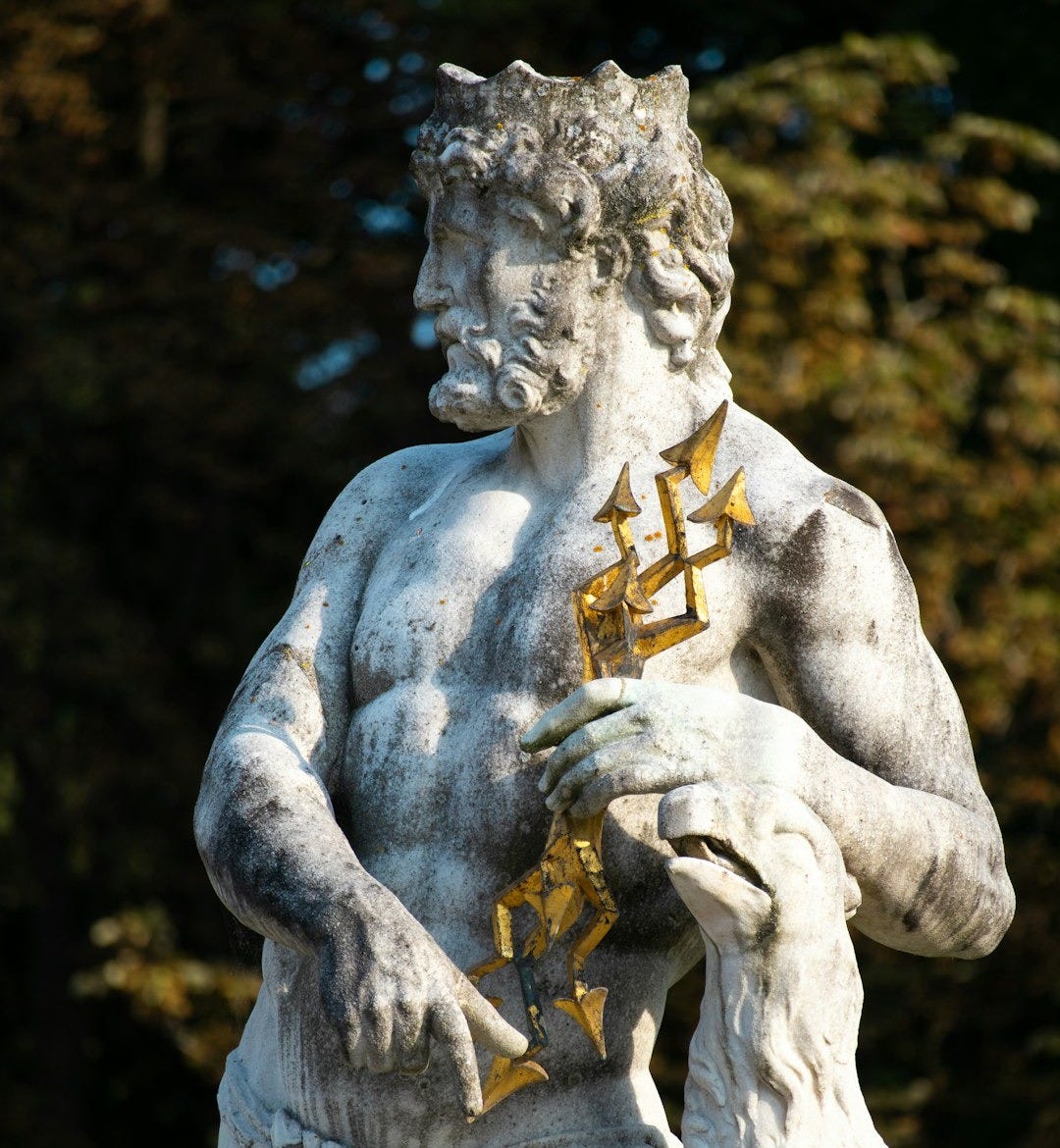
Hercules finally reached Illyria and found the sea god he’d been looking for, Nereus. He asked Nereus where the Garden of the Hesperides was, but the god couldn’t be persuaded to divulge such sensitive information to a random mortal. Hercules didn’t let this stop him, however, and grappled Nereus, goading him into a fight. Nereus kept shapeshifting, trying to trick Hercules into letting him go, but Hercules held on with all of his might through transformation after transformation. Eventually, Nereus realised that he couldn’t escape the grip of Hercules so he relented, telling the hero what he wanted to know; the Garden of the Hesperides was close to where he had already been, close to Erytheia, the island that was named for one of the Hesperides herself.
Hercules consequently left Illyria, heading for the end of the world once again. On the way, Antaeus, a son of Poseidon and Gaia, also challenged Hercules to a fight as he did to all passers-by. After several exchanged blows, Hercules had learned that Antaeus became almost unbeatable while he was connected to the earth, so he ran at him and lifted him high into the air, weakening his opponent. He then crushed Antaeus, just as he had almost crushed Nereus, but this time he crushed to the death.
As he passed through Egypt, Hercules was stopped on the road. On this occasion, he was confronted by yet another son of Poseidon, King Busiris of Egypt, who was notorious for capturing visitors and sacrificing them to the gods. Busiris managed to have his men haul Hercules as far as the altar before he could escape his bonds, but once he was free he killed the men and their king, ending the sacrifices of Egypt’s travellers for good.
Still far from having reached his goal of the garden, Hercules was stopped yet again, this time by the son of the dawn goddess Eos. The king of Arabia, Emathion, tried to stop and fight Hercules to try and prevent him from reaching the golden apples. Hercules, having had more than enough kings try to interrupt his labour, killed Emathion outright instead of prolonging the tussle and both sides’ patience.
Instead, he gave the Arabian kingdom to Memnon, Emathion’s brother, and moved on, heading for the Caucasus mountains. While he was there, Hercules naturally came across Prometheus, the shamed Titan chained to the mountains for punishment. Hercules had heard plenty, as had all of humanity, about Prometheus’ sacrifice and consequent torture and spotted an opportunity to help the Titan who had sculpted mankind and get some answers for himself along the way.
He scaled the sheer rock faces of the mountain where Prometheus was chained and sat, biding his time. Finally, when the eagle flew in to pluck out Prometheus’ liver as it had done every day of his time there, Hercules struck and killed the eagle with his club, at last ending the worst part of the Titan’s torture.
Beyond grateful, Prometheus shared a trick with Hercules to obtain the apples. Rather than journeying all the way to the end of the world to fight a hundred-headed dragon and maybe even the Hesperides themselves, Prometheus suggested that instead, Hercules approach the problem from a different angle. He told Hercules where to find Atlas, the father of the Hesperides, and suggested that he bargain with or trick Atlas into retrieving the apples for him, especially since the Hesperides would be far more likely to let Atlas borrow the apples than Hercules, known irritant of Queen Hera.
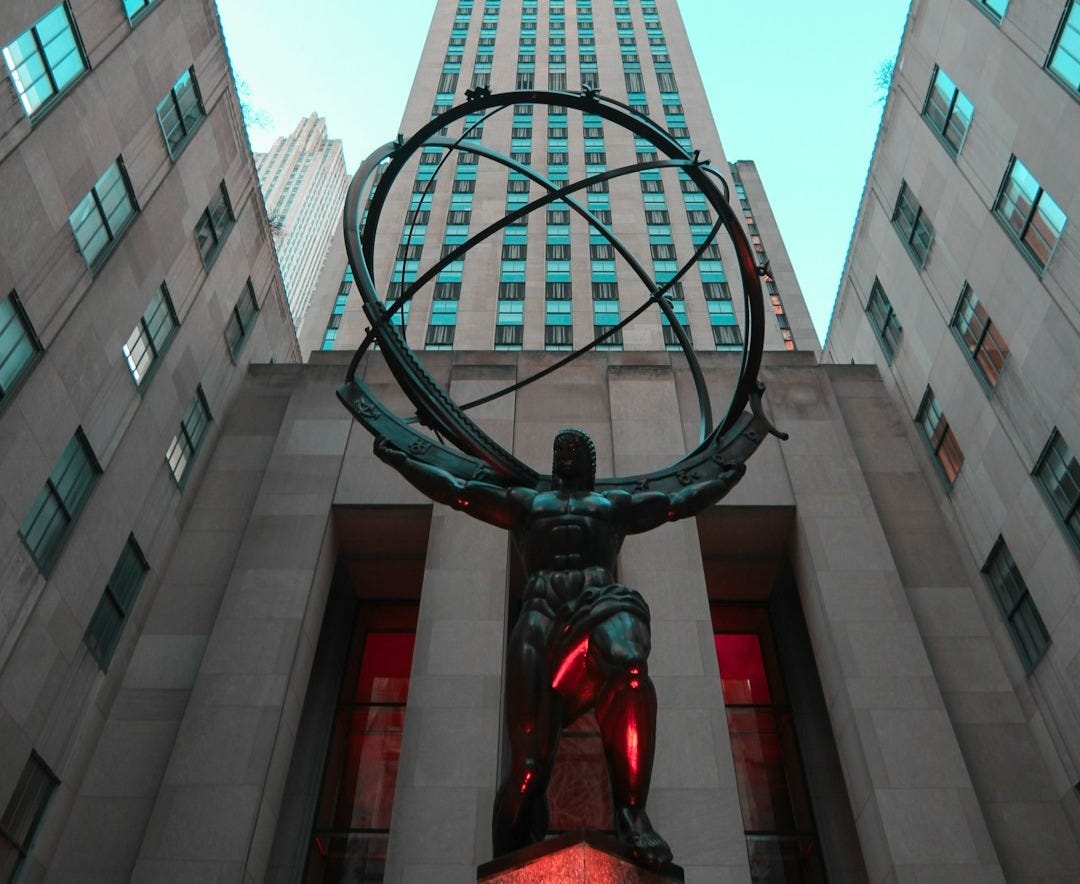
Hercules thanked Prometheus for the advice, changing course for the location of Atlas at once. He reached the mighty Titan where he knelt, holding up the sky in his own Zeus-given punishment. Hercules made Atlas a tempting offer: if Atlas would retrieve the apples from the garden for him, Hercules would hold up the sky in his place while he was gone, giving him a rest he hadn’t felt since the Titanomachy so many centuries ago.
As Prometheus had predicted, Atlas did indeed jump at the chance to have any kind of respite from his arduous task and readily agreed to Hercules’ deal. He disappeared off toward the setting sun while Hercules took on the mantle of the sky, waiting patiently for his return under such a gargantuan weight. Atlas did, in fact, return, but he nonetheless tried to trick Hercules, suggesting that since he already had the apples, he may as well take them to Eurystheus on Hercules’ behalf.
Immediately seeing through this feeble attempt to saddle him with the sky on a more permanent basis, especially since Prometheus had warned him that such a thing may happen, Hercules agreed, on the condition that Atlas momentarily take the sky back while Hercules padded his shoulders. Atlas, ecstatic, took back the sky, but his elation quickly boiled into anger when he watched Hercules pick up the basket instead and walk away. As frustrated as he was for this trick, Atlas could do nothing about it, cursed as he was to continue holding up the sky for eternity.
When Hercules successfully returned to Mycenae under its king’s utter bemusement, Eurystheus still stayed true to his word and validated the task. Hera had warned her charge against keeping the apples for himself, since no mortal could possess them; instead, Eurystheus returned the apples to Hercules and instructed him to give them to his own patron, Athena, to return to the garden and its nymphs. Hercules did so, Athena appearing to him as she always had when he needed her, and she was happy to return the apples as Hera bade. She wished him luck on his final task and stepped into a fold in reality, vanishing as quickly and smoothly as she always did.
Hera and Eurystheus were baffled. Somehow, Hercules had had the audacity to perform and complete eleven out of the twelve labours he owed. They decided that they had to give him what surely must, this time, be a task that no man, even Hercules, could complete. They would have him kidnap Cerberus, the enormous, triple-headed guardian dog of the underworld, and bring it back from its dread-master’s icy halls to the blazing heat of Mycenae.
Much like Psyche before him, Hercules travelled to Sparta, to Taenarus, and used the cave’s deep entrance to Hades. He let the dense shadow of the underworld wash over him and press close to his skin as he strode confidently into the darkness. He retraced Psyche’s steps, crossing the river and over to the palace of Hades and Persephone where Cerberus stood vigilant guard.
Hercules appealed to Hades and explained his task, asking to borrow Cerberus only for as long as it would take to complete the labour, promising to return him at the earliest possible opportunity. Hades considered Hercules’ request carefully and agreed, allowing Hercules to take Cerberus, but only under the condition that he didn’t harm the dog and used no weapons to overpower him.
Hercules promised that he would abide by these conditions and lavished Hades with thanks for his help. He left the throne room and headed back out to Cerberus, immediately engaging in a wrestling match with the enormous dog. After some long while in a battle against him, Hercules at last succeeded and wrestled Cerberus into submission, at which point he brought him out of the underworld and straight to Eurystheus.
King Eurystheus was shaking with fear as Hercules approached the walls of Mycenae with the towering, three-headed dog in stride. Of all of the terrifying feats Hercules had performed, this was too much. Eurystheus ruled that Hercules had completed all of his labours and had successfully worked off his soul-debt to the gods over his twelve years of service. He bade Hercules return Cerberus to the underworld with haste and forbade him from ever coming back to Argolis, so afraid of his strong cousin was he.
Hercules, his soul newly-purified by the completion of his service, guided Cerberus back to the underworld with a spring in his step, a free man now relieved of the burden of his family’s eternal souls.
Find the eighth part of Hercules’ story here:
