
Centaurs and Wine
Hercules, Part 4: Slaughtering so many for something that wasn't his
Content warnings: harm to an animal, trapping animals, mass killing, accidental self harm and consequent death
Find the last two parts of Hercules’ story here:
Part 2

Part 3

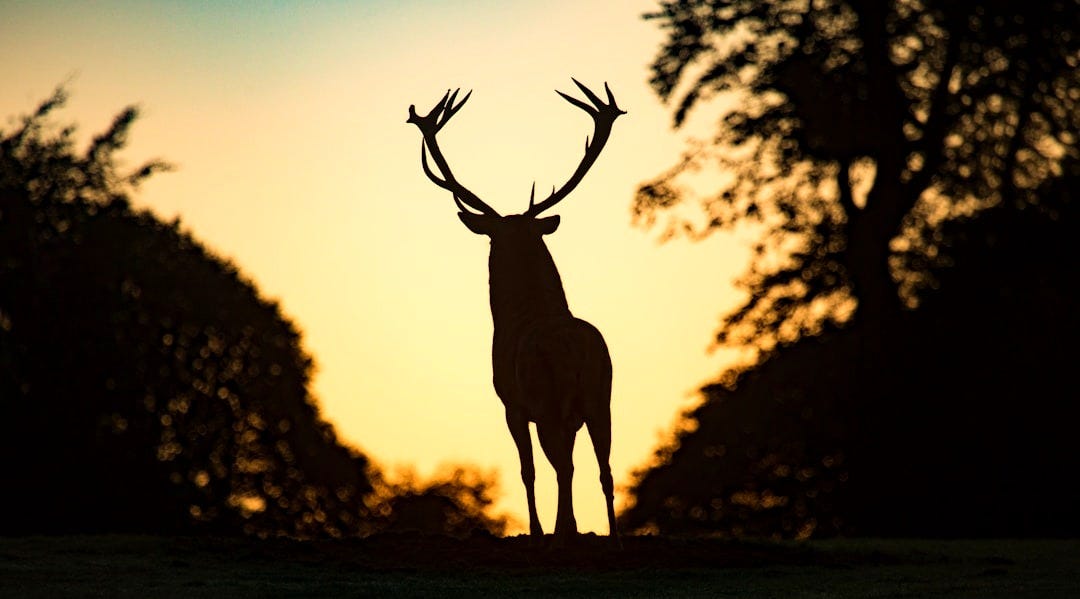
Eurystheus ruled that Hercules’ third labour would be to capture Artemis’ sacred Ceryneian Hind that roamed the region of Arcadia. It was a special female deer with golden antlers and bronze hooves that was faster and larger than any normal deer. It also terrorised the local farmers and landowners by roaming across their lands, as it could breathe fire and regularly sent fields and woodland up in flame.
The Ceryneian Hind was one of five; the other four hinds pulled the chariot of Artemis. By giving Hercules the task of trapping one, of potentially hurting or killing it, Hera was aiming to get him on the terrifying bad side of the goddess of hunting, known to be persistent, ruthless and violent to those who crossed her or her companions, nymph and animal alike.
For a whole year, Hercules walked the Arcadian forests, stalking the hind from afar but never quite able to get close enough to catch her. At last, at the end of the year, the hind came to rest at the River Ladon in Arcadia, giving him his blessed chance to strike. He shot it with one of his poison-tipped arrows, fatally wounding it. While it was still alive, Hercules slung the deer across his shoulders and set back out for Mycenae, at last successful in his dangerous quest.
He didn’t get far before the enraged Artemis stopped him with a word, her bow already taught with a precise, fateful arrow. Hercules hastily dropped to his knees and apologised, begging forgiveness, where explained that he was tasked to capture the hind. Without shooting it, he reasoned, the trial would have been impossible, adding that the Oracle herself had decreed that he was to complete the labours.
Artemis judged Hercules’ statement, slowly relaxing the bowstring. She allowed him to go on but healed the deer, extracting from the hero a promise that he would release it as soon as he had his task verified.
True to his word, as soon as Eurystheus had seen the hind and declared the third task as complete, Hercules released the animal. It sprang up at once and started back the way they had come, back to its expectant mistress in the depths of the forest.

For his fourth labour, Hercules was to capture the Erymanthian Boar alive. The boar had been running amok on the slopes of Mount Erymanthus, laying waste to anything and everything in its path. On his way to the mountain, Hercules stopped off at the cave home of his centaur friend Pholus, who lived on Mount Pholoe.
Pholus was an attentive friend and a kind host, so he set aside the usual centaur tradition of eating meat raw for his guest and cooked Hercules’ meat when he prepared dinner that evening. Though he couldn’t see the appeal in such an overcooked offering, the meal was received well by Hercules, who enthusiastically wolfed down the dish.
Midway through the dinner, Hercules asked Pholus if he had any wine that he might have as he ate. When the centaur hesitated, Hercules only pressed harder in his request. Conscious of his guest’s right to anything he had in store under the hospitality rules of xenia, Pholus explained that he was torn; while he did have a store of wine, it didn’t belong to him alone, so he couldn’t provide Hercules with such a drink without an atrocious betrayal of his brethren. Hercules assured him that it would be fine, that it was only a little wine, and opened the amphora without any further consideration to the abject horror of his host.
The heady scent of the wine drifted from the cave and into the surrounding forests, acting like a summoning horn to nearby centaurs. They converged on Pholus’ cave, demanding to know why their wine had been opened, and were irate to find a human man consuming it instead, a distressed Pholus by his side.
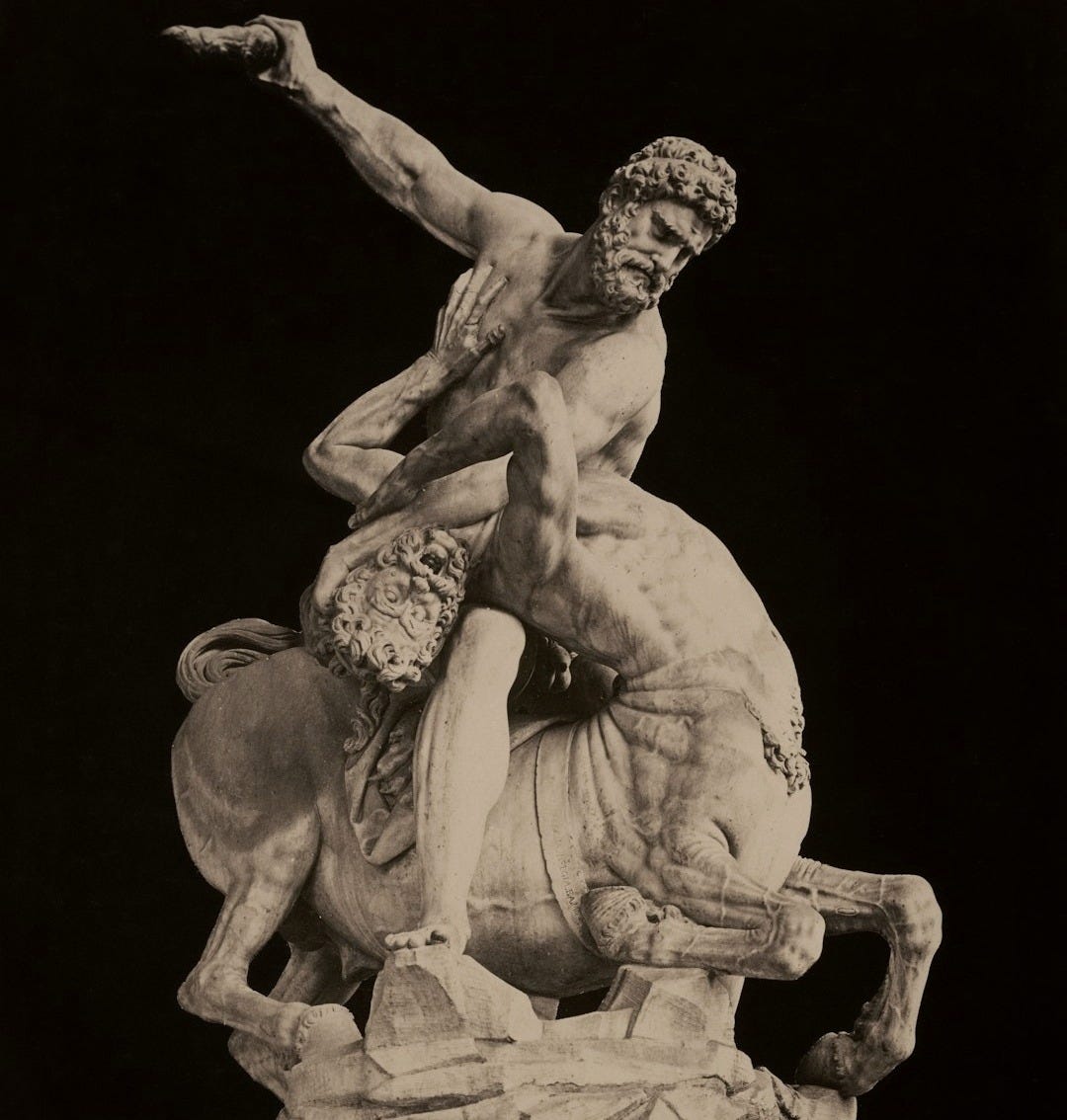
Realising that he had an increasingly belligerent audience, Hercules quickly made a grab for a handful of hot sticks from the fire, throwing them, lightning-fast, at the closest centaurs. He then snatched up his club and took the fight to them, the retaliatory arrows and sword slashes glancing off his lionskin armour as though drops of rain. He pursued the centaurs from the mouth of the cave, chasing them off for twenty miles, shooting indiscriminately with his Hydra-poisoned arrows, striking several centaurs as they tried to retreat.
Pholus, watching helplessly as his friends and brothers were slaughtered before his eyes — for he knew there was nothing he could do to stop the fighter in Hercules — bent over, marvelling at the arrows Hercules was using. He plucked one out of a nearby centaur’s dead body and wondered at the power of something so small to take something so mighty as a life. So lost in thought as he was, Pholus fumbled the arrow and it pierced him in the leg as it fell from between his fingers.
Content with his evening’s slaughter, Hercules came back to the cave to continue his meal and wine, only to find his friend dead from one of his own arrows. Melancholy and grieving over the loss of Pholus, Hercules spent the evening burying his friend and bidding him a smooth journey over the Styx.
The next day, Hercules set back out to finish his task and finally arrived at Mount Erymanthus. He tracked the boar down and pursued it relentlessly across the mountainsides until, at last, it was tired. Hercules drove the pig into the deep snow covering the mountain, capturing it in a strong net made for just such a purpose.
He brought the boar, wriggling and roiling in its net, back to Mycenae but Eurystheus was too afraid to even check the squirming bundle. Instead, he proclaimed the task complete and hid in the bronze jar he’d had planted in the ground until Hercules took the boar away and released it back into the wild.
Find the fifth part of Hercules’ story here:
