
Tensions Rising
The Trojan War, Part 6: The fight reignited
Content warning: sex, threat, blood, wounding
Find the last two parts of the story of the Trojan War here:
Part 4

Part 5


Aphrodite, content that her champion was safe away from the battlefield, now set her more amorous plans in motion. She took the form of an old handmaiden, a woman Helen loved dearly and trusted implicitly. In such a guise, Aphrodite found Helen where she stood at the ramparts with a gaggle of other palace ladies all trying to catch a glimpse of the duel. The goddess willed herself and Helen to go unnoticed by the other women nearby, then tugged at Helen’s sleeve to attract her attention.
Helen looked around to see her old friend, who promised to take her to her husband and encouraged her to come away with her. Helen, however, saw the old woman for who she really was, the goddess who had been the root cause of all this death and destruction. She challenged Aphrodite by name, unleashing her anger at the goddess’ latest attempt to manipulate her. Helen, even though she longed to see Menelaus again, was sure that Aphrodite was up to some nefarious scheme and refused to go with her, certain that her beloved husband had killed her new husband in their duel.
Aphrodite drew up to her full mortal height at once, dropping her elderly disguise and allowing her offence to be seen fully in her face. She silenced the raging Helen with just a gesture and swiftly cut her to the quick with a few choice words, verbally undressing the queen as though she were an insolent child. She named her as such too, decrying Helen’s wilfulness and commanded that she come with her at once, turning to lead the way without another glance.
Helen, immediately terrified by such a display of import, meekly and silently followed in her wake, taking notice of the women around her and their complete, divine-willed ignorance of what had transpired right beside them.

To Helen’s surprise, Aphrodite led her to her own chambers, the ones she had vacated only a short while before. Lying on her bed was Paris, safely deposited straight from the duel by Aphrodite and her mist. The goddess grasped a chair and set it opposite Paris, gesturing for Helen to sit and talk with her lover. With a last, conspiratorial wink to her champion, Aphrodite disappeared into the realms of rose coloured light she then summoned, leaving Helen and Paris notably alone.
Helen sat in the proffered chair but faced herself away from Paris, unwilling to meet his gaze. An awkward silence fell on the couple for several moments before Helen interrupted it at last, declaring in a rush that she wished Paris had died at Menelaus’ hand in the duel, that to escape was the height of shame and cowardice.
Paris sat up then, desperate to assure his love of his innocence and again employed an argument that he had so recently used on his brother. It was Aphrodite, he declared, who had transported him away, and who was he to refuse the gifts of a goddess? He added that Menelaus was only winning the duel thanks to the help of Athena, that she had gifted him with battle-wisdom and he would not have succeeded if the duel had been a mortals-only affair.
Satisfied that Helen must be placated by such a well-tested argument, he soon turned his attention toward other, more interesting topics, taking the adrenaline from the duel and directing it confidently toward more titillating activities. He knew Helen and knew what she liked, and before long he was seducing her all over again, calling her ever more beautiful, even more than when they had first met.
On the battlefield that Helen and Paris soon eagerly forgot, however, Menelaus was marching up and down the ranks of Greek and Trojan soldiers alike, demanding that Paris show himself. In the long-stretching minutes since the unceremonious end of the duel, nobody had been able to find the missing, presumed cowardly, Paris. Even the prince’s own troops had no wish to hide him, so overjoyed had they been for a chance to end this interminable war.
After some further searching for a man so clearly disappeared, Agamemnon announced the duel’s victor as Menelaus, the only fighter still on the field.

Up on lofty Olympus, Zeus and his council of Olympians were sat on their golden thrones, observing the day’s events in and around Troy. Zeus, noticing the long, detailed, whispered conversation that Hera and Athena had been having for some time, decided to taunt them about how hard they were working on the Greeks’ behalf while Aphrodite meddled flagrantly in her bid to protect her less-than-heroic Paris.
Aloud, he considered the merits of meddling himself, of whether Olympus should prompt the two sides into a continued conflict. After all, he reasoned, the current truce was no real victory for either side and such a result would be immensely unsatisfying to all gods concerned.
Hera emerged from her scheming with Athena, tired as she was of her husband’s apparently constant taunts. She was exhausted, she announced, of Zeus and his petty, momentary plans disregarding all the work she had put in to the Greek army for so long. She lambasted him for seeing the Trojan War as some mere plaything, an amusement to be toyed with. The other gods cared deeply, she went on, and not all of the Olympians would agree with his fleeting interference or the buxom, watery reasons for his temporary support of Troy.
Zeus bit back, demanding of his wife what Troy could possibly have done to bring down so much of her hatred on their heads. Angered by her daring to retort, he went on to threaten her and her most beloved cities, adding that if he wanted to he could destroy those mortal kingdoms she held so dear. He would not, he insisted, be the only one to have his allegiance swayed in doing a favour for one side or the other, fickle and mercurial as the other gods were.
Hera met Zeus’ words boldly, challenging him to do his worst. She named her favourite cities for him, Argos, Sparta and Mycenae, and announced that if he should strike them then he shouldn’t forget that, like him, Hera was a god. First daughter from the stomach of their father, she was the eldest girl of Kronos, capable of raining vindictive vengeance down upon him just as he was of her.
She went on, reasoning that if Zeus wanted a fight then they could break the truce, send Athena down and have her influence the soldiers to continue the war. Zeus took up the offer at once, delighted to have a spirited, if daring, opponent, and entreated Athena to follow Hera’s instruction and provoke the two sides into war again.
Athena was happy to do so, in league with Hera as she was, and bounded from her throne into her golden light that would take her effortlessly down to the battlefields.
Athena appeared in the makeshift duel arena, visible to all who had gathered there. Some men took her presence as a sign of Zeus’ approval, while others took her to be a portent of a battle continued. She relished in their attention before vanishing again, reappearing behind the Trojan lines in the form of Laodocos, a trusted son of Priam’s advisor, Antenor.
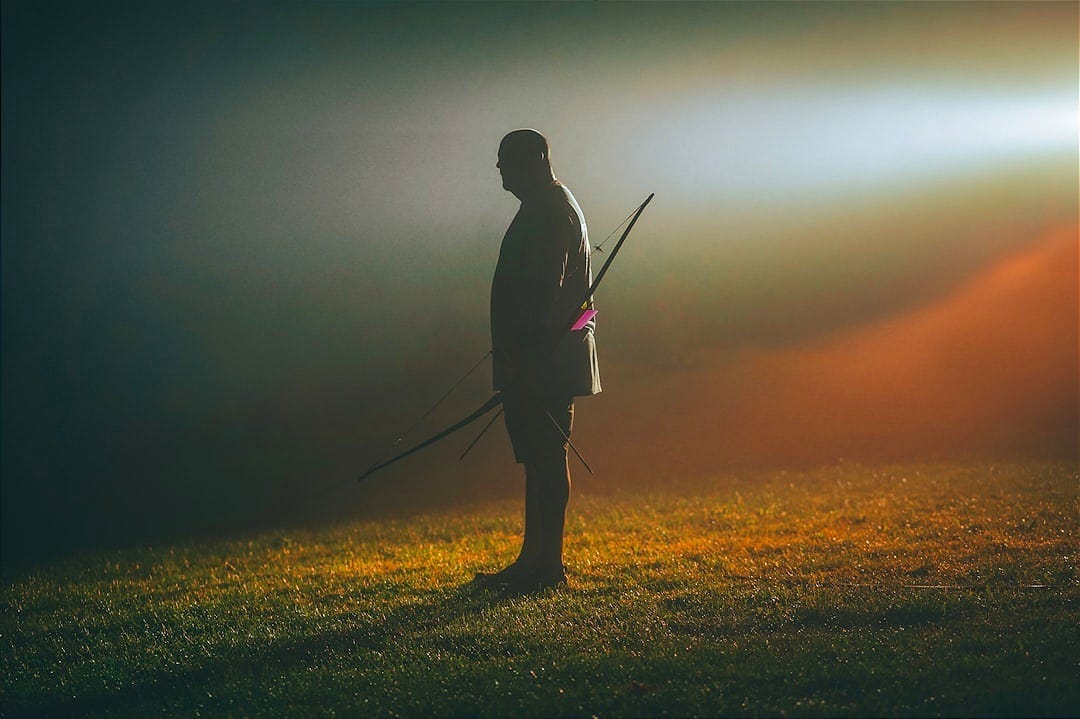
As Laodocos, Athena sought and found Pandaros, a skilled archer in the Trojan forces. She spoke with him and encouraged him to take a shot at Menelaus. She gave him justification, explaining that the Trojans would only thank him, Paris most of all, for killing Menelaus, one of their fiercest opponents and the Greek army’s reason for fighting. His death, she said, would be the end of the Trojan War for good. She added that Pandaros should pray to Apollo before taking aim, asking the bow-wielding god for a faithful, accurate shot in return for sacrifices on his return home after a successful end to the war.
Pandaros was swayed by Athena’s wily tongue and the honeyed words she poured into his ears. Convinced that killing Menelaus would end the suffering of his friends and allies, Pandaros charged his men with surrounding and shielding him while he strung and nocked his bow, preventing the Greeks from realising his plan and killing him before he could take his essential shot.
The arrow loosed from Pandaros’ bow after his careful aim but Athena had forestalled the consequences she had put into action. She stood, invisible, in front of Menelaus and took charge of the arrow, changing its path to make sure it missed his essential areas. The arrowhead instead was driven into a piece of reliable armour, thick enough to ensure his protection from too much damage but thin enough to produce enough blood to become obvious.
The soldiers around Menelaus felt their hearts drop, not only for their king’s life but for their own futures too; with that one arrow, the Trojan War would continue to the bitter end as Agamemnon had promised the gods only an hour before.

King Agamemnon watched as his brother suddenly keeled over with the impact of the arrow. Within moments, he was by his side and gently supporting Menelaus to the ground. He lamented ever accepting the terms of the duel and putting his brother in such danger, though he was sure that the mighty Zeus would strike down whoever had violated the truce.
Faithfully tending to Menelaus, Agamemnon beseeched him not to die, that he couldn’t leave the touch of Gaia’s soil before he succeeded in his quest to regain Helen and the stolen wealth. Menelaus smiled despite his pain; he assured Agamemnon that he was in no state to greet Hades, that the arrow had struck nothing important and his armour had performed admirably.
Relieved to hear such news but remaining anxious nonetheless, Agamemnon called for Machaon, son of Asclepius, to attend the king and administer his healing salves. The shot had been a good one, he admitted, even if it had broken the treaty between the two warring sides, and he needed the assurance of his brother’s life from a healer with the reputation of a son to the legendary Asclepius.
Machaon attended the kings quickly, bringing with him the salve Agamemnon had requested. It had been given to Asclepius by Chiron, and only the best of the best was to be used on the king of Sparta. As Machaon and his trusted attendants clustered around Menelaus, both the Greeks and the Trojans reluctantly took up their arms once more, preparing for the fight that would surely follow.
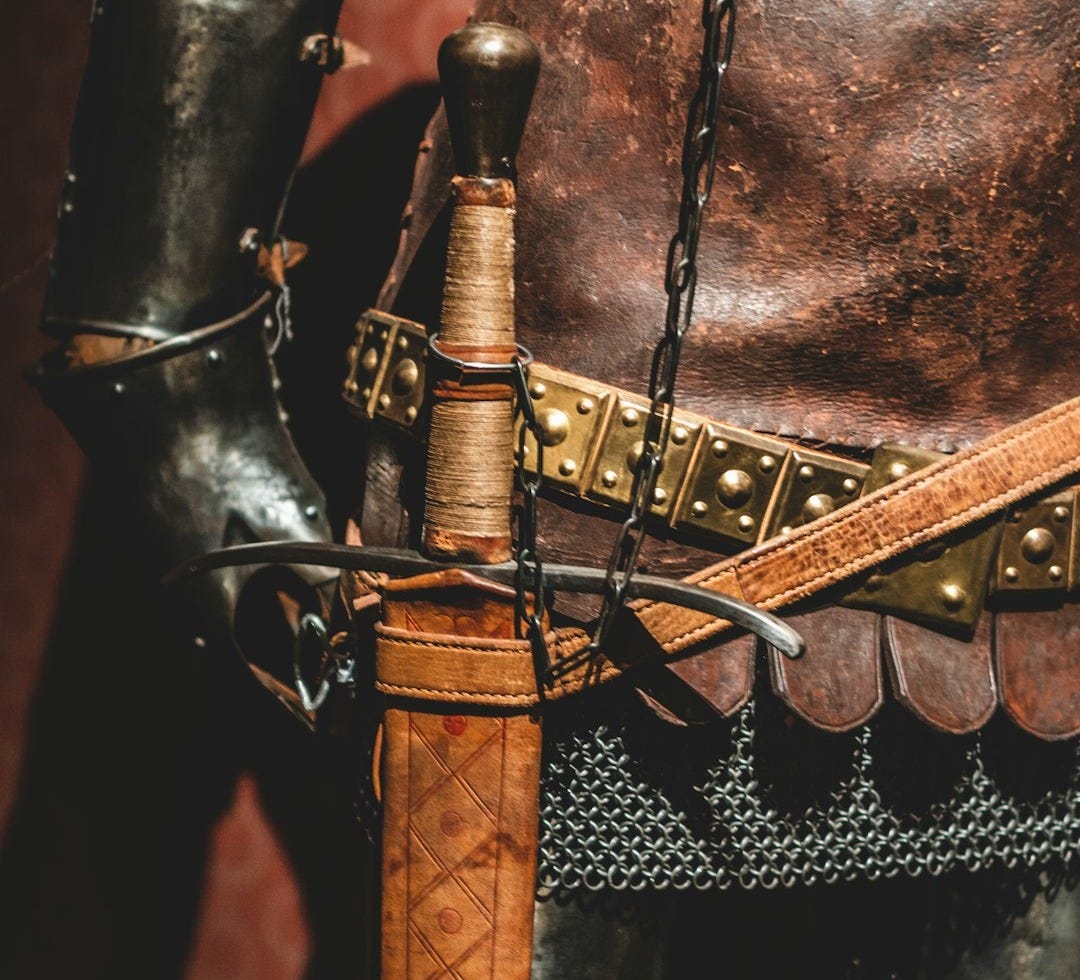
Agamemnon, leaving Menelaus in the capable hands of his healers, took up his own weapons and armed himself for the oncoming skirmish. He paced down the ranks of his readying men, calling out words of inspiration for them as he went. He proclaimed the Trojans to be liars, cowards who couldn’t hold a truce under oath, threatening that the Greeks would steal away wives and children while they killed their men.
He talked with his leaders as he approached their companies, cajoling and shaming in equal measure, provoking his men to action by calling them helpless and dazed as deer. He spoke with Nestor, busy arranging his men in chariots and lining his foot soldiers behind, sandwiching the cowardly men in the middle to prevent them from fleeing. He advised his chariot drivers on the best way forward, making sure they would stay level with each other and not fall away, destroying the lines.
Agamemnon clapped Nestor on the back, voicing his admiration for him and adding how he wished he was young once more so he could lend not just his wisdom but his considerable might to the cause in a more youthful, lithe body.
He came across Odysseus and Menestheus, the king of Athens, who had not yet heard the call to arms as they and their men were some considerable way from Menelaus’ attack. Agamemnon berated the pair for not having their men ready, though Odysseus bit back freely, scolding the king for being so harsh on them when their men were mighty and fought courageously for the Atreidai and their cause.
Agamemnon basked in Odysseus’ anger with a broad smile, grasping his shoulder and eagerly taking back his words in the face of such an assuring show of combativeness. He was delighted to see such readiness to fight and moved on, continuing down the line to greet Diomedes and Sthenelus, a son of Capaneus.
He reproved them also, comparing them woefully to the greatness of their warrior fathers who had fought to regain the throne of Thebes. Sthenelus responded heatedly that while their fathers had died on their quest to win back Thebes, Sthenelus and Diomedes had done what their fathers couldn’t and raided that same city successfully. He argued that they had surpassed their father’s memories, so they couldn’t be compared in the same breath. Diomedes, however, noticed Agamemnon’s clumsy attempt to encourage his commanders and curbed Sthenelus’ flaring temper with gentle words of his own.
The Greeks gathered together under the leadership of their kings and prepared to fight, led by Athena and Agamemnon. The Trojans were more disjointed, fighting as they were with many different armies, peoples and languages. They were corralled together by Ares, however, and he led them against his half-sister with relish, primed with a craving for bloody battle.
Find the seventh part of the story of the Trojan War here:
