Pretty Boy
The original Adonis
Content warning: intense incest, attempted suicide and fatal goring
Reader warning: This post is an intense one. Proceed with caution.
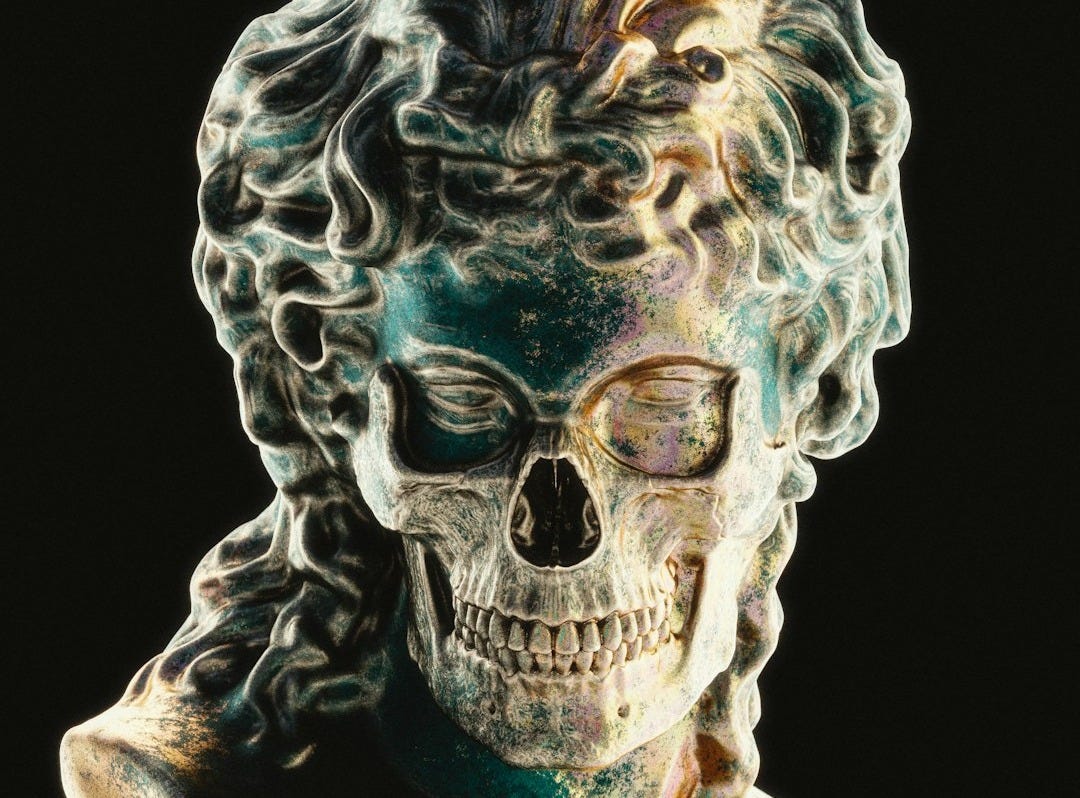
King Cinyras and Queen Cenchreis were the rulers of Cyprus. They had a daughter, Myrrha, and would often boast of her captivating looks, saying that she was surely prettier than Aphrodite, the goddess of beauty herself.
As with any god being compared to a mortal, Aphrodite was not impressed by these claims, getting further outraged with every heretic comment the king and queen uttered. Eventually, the provocation got too much for Aphrodite and she sent her son, Eros, god of love, to avenge her reputation. He did as she instructed, piercing Myrrha with one of his arrows and cursing her with a forbidden lust for her own father, Cinyras.
Myrrha quickly discovered these new, unnatural feelings when she saw her father the next day. Confused and experiencing a sinking horror, she excused herself and spent the day in a flustered panic, baffled by the feelings’ sudden, violent and unknown beginnings.
Finally, the cool, still night descended upon the palace and Myrrha slipped out of a side door and into the darkness, where she intended to stay. Hippolyte, Myrrha’s old nurse, had struggled trying sleep that night and heard a sobbing from below her window. Recognising the sound of her charge’s familiar cries, Hippolyte hurried outside and went to find Myrrha; she did, and was shocked to find a rope in Myrrha’s hands tied to the lower branches of a sturdy tree.

Hippolyte exclaimed in shock and eased the rope from Myrrha’s trembling hands, taking her quickly into her arms where the girl collapsed, shaking from the weight of her tears that spilled unchecked down her cheeks and soaked into Hippolyte’s tunic. Distressed at the usually carefree Myrrha’s unexpected change in personality, Hippolyte comforted her there on the grass and asked what could possibly be wrong, what could drive her to such drastic action.
At first, Myrrha couldn’t bring herself to tell her nurse, too horrified to put her perverted thoughts and feelings into words. With enough pestering, however, Hippolyte managed to get the truth, learning about Myrrha’s new, awful impulses. Though somewhat disturbed by such revelations, she couldn’t help but see the distraught girl in front of her and feel pity for the girl she’d raised who was now so repulsed by her own infatuation.
Having let Myrrha cry herself into tiredness, Hippolyte helped her back to her bed before returning to her own, considering what she’d learnt over the past hour and how she could help her surrogate daughter.
A few days later, a festival was held and King Cinyras was drunk, ignoring his wife, and looking for someone to spend the night with. Hippolyte influenced him during the evening, telling him that she had found someone of his daughter’s age who was in love with him. She told him that she would bring the girl to him if he remained in a dark room, that he couldn’t see her face or the mystery would be ruined. He readily agreed and Hippolyte quickly fetched Myrrha, who was both excited and appalled at that excitement.
After that enticing and mysterious night, Cinyras continued the affair with his enigmatic lover for several days, until at last he couldn’t bear not knowing her identity for another moment. While she was turned away he lit a lantern, feeling his heart drop as his eyes adjusted to the glare and the girl looked around at the lamp. Appalled at seeing his own daughter with such profound guilt in her eyes, Cinyras leapt up and drew his sword, threatening Myrrha even while she fled from him in her fear and her shame.
She ran as far and fast as she could from her shocked and raging father, begging the gods to transform her into a tree to escape his anger after giving in to such immoral feelings. Someone on Olympus must have heard her cries as she was granted her wish: she became a myrrh tree, her tears flowing from water into sap. She soon realised that she was pregnant by her fateful union with her father, and several months later Myrrha’s tree split open to birth a baby boy.

Aphrodite found Adonis, Myrrha’s baby, and found him so charming and so sweet that she feared any other Olympian goddess raising him. To protect him from them, Aphrodite placed the cooing Adonis into a chest and presented it to Persephone, goddess of the dead.
Persephone promised to take care of the box and its contents until Aphrodite returned for them; once Aphrodite had departed from the underworld, Persephone glanced into the box and immediately recognised the baby’s charm, just as Aphrodite had. She raised Adonis and cared for him as Aphrodite asked and he grew into the most handsome man any mortal or god had laid eyes upon.
Now that Adonis was an adult, Persephone had fallen in love with him and the day of Aphrodite’s return had arrived. On seeing Adonis again, fully grown, Aphrodite also fell for him. There was an issue, however; despite her promise, Persephone was refusing to let Adonis leave the underworld. This began a feud between the two jealous goddesses, which was only settled at last by Zeus’ intervention.
Zeus split the year into thirds, then allocated one third to Aphrodite and one to Persephone. Adonis himself was given the final third, to spend with whichever goddess he preferred. Aphrodite had won him over with her charm and her loveliness, so Adonis elected to spend his third of the year with her. Together, Adonis and Aphrodite had two children, a nymph daughter named Beroe and a son named Golgos, though Adonis was rumoured to have several other lovers too, including Apollo and Dionysus.
Adonis was an enthusiastic and skilled hunter and would often venture into the forests of Greece to hunt. Though she tried to be supportive of her lover’s pastime, Aphrodite had a dream in which Adonis was fatally wounded while he hunted. She woke, shocked, and warned Adonis not to hunt large animals if he must go at all. He brushed off her concern, however, and went back out into the forests while paying no further mind to her warning.
Ares, notorious and jealous lover of Aphrodite, had noticed her attention toward him waning as she fell further in love with Adonis. Even though Aphrodite was cheating with Ares on her husband and his brother, Hephaestus, Ares nonetheless became outraged when she gave her love to someone new. To get rid of this upstart Adonis, Ares sent a violent, wild boar to gore and kill him while he stalked the forest.
The boar struck and Ares’ plan was successful; Adonis could only regret taking Aphrodite’s earlier warning so glibly as he laid on the forest floor, dying. Feeling something was desperately wrong, Aphrodite searched the forest for her love and found him on the edge of death. Devastated, she tried to seal his wounds with nectar but it wasn’t working fast enough to save him. Through her tears, she watched Adonis breathe his last, her tears mingling with the nectar and his blood. Where these droplets fell, red anemone flowers bloomed from Aphrodite’s mourning. Adonis’ blood pooled, seeping into the nearby river and staining the water red. That river would thereafter be named the Adonis River to commemorate the tragic revenge exercised so close to its waters.