
A Twisted Prophecy
Theseus, Part 1: The meddling of gods and mortals
Content warnings: cheating, animal carcass

King Aegeus of Athens had been unlucky with the task of producing an heir. He had been married twice, first to Meta and then to Chalciope, but neither could give him what he truly needed. The pressure on Aegeus to provide a successor was ever-growing, with his brothers becoming increasingly restless to put themselves or their children on the throne instead.
Getting more and more concerned about the safety of his life, lineage and throne, Aegeus travelled to Delphi and consulted the oracle there, begging her for an answer to his problem. Sure enough, the oracle spoke Apollo’s words of wisdom:
‘Do not loosen the bulging mouth of the wineskin until you have reached the height of Athens, lest you die of grief.’
As was often the case with prophecies from oracles, Aegeus had no idea what her words could possibly mean. Dejected and confused, he set off back to Athens still throwing the oracle’s words around his head to find any possible meaning in them.
Finding himself still stumped and getter closer and closer to home, Aegeus decided that he should consult a king wiser and cannier than himself. He stopped in at the port of Troezen and paid a visit to its king Pittheus, asking him if he could decipher the riddle of the oracle’s prophecy and make sense of it.
Pittheus had been a good choice; he assured Aegeus that he would make sure that the prophecy came true. It was true that he’d discerned the oracle’s meaning, but he wanted an heir with Aegeus’ blood and decided to take his friend’s trust and the divine words into his own hands. He’d interpreted the Pythia’s warning and realised that if Aegeus had sex before he could reach his wife back in Athens then the king would meet with a grief-stricken end. Intent on having his own way, however, Pittheus got his guest extravagantly drunk and instead sent him to his daughter’s room.
Princess Aethra of Troezen was surprised by her father’s appearance at her door with the drunk king of Athens, but she wasn’t unhappy about it. She welcomed Aegeus into her bed and they slept together, as had been Pittheus’ plan. During the night, however, Athena visited Aethra in her dreams. She told the young woman to wake and wade over to the nearby beach on the island of Sphaeria to make an offering to the gods; if she did this, Athena promised that she would be blessed in return.
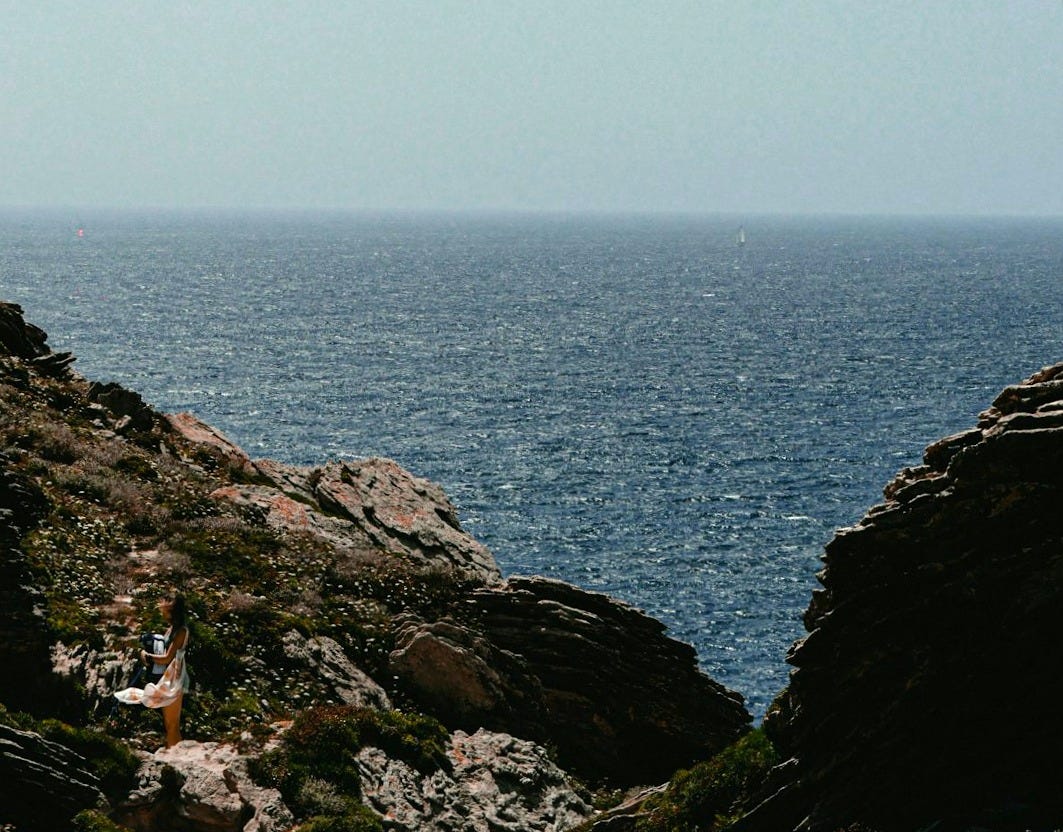
Aethra followed Athena’s instructions to the letter, making an offering and then letting the water wash over her feet as she gazed out to sea and the horizon beyond. While she stood lost in thought, she barely noticed the man wading from the water toward her until he was in front of her. The man was Poseidon made flesh and he seduced Aethra then and there, giving her an entirely different kind of blessing than she’d anticipated.
Soon, Aethra realised that she was with child from her active night amongst a king and a god. Aegeus was overjoyed to hear the news, as was Pittheus, delighted that his scheme had borne such successful fruit. As time went on, though, pressure began to mount on Aegeus to return to his kingdom, especially under the threat of his usurping brothers.
Before he set sail for Athens, Aegeus took Aethra out to walk along a nearby mountain path. They reached a large boulder, some way from the palace, and stopped there to take in the view. Aegeus took Aethra’s hand and told her that while he had to leave, it wouldn’t be safe for her to come with him with their child; nobody could know who the baby’s father was. He feared the plotting of his most deceptive and ambitious brother, Pallas, and told Aethra that instead he’d hatched a plan of his own.
He asked her to stay with her father so that the Troezen king could teach their child his wisdom and how to rule a kingdom, for one day they would rule Athens. He told her that beneath the very boulder next to them, he’d secreted away his sandals and his sword: if their child was a son, Aethra was to bring him up to the boulder when he became a man. If the boy could lift the rock and retrieve his belongings, donning them as Aegeus had, then she was to send him to Athens, where Aegeus would recognise him as his son and heir and welcome him into his new kingdom.
Aethra promised that she would follow his instructions and raise their child to be a worthy ruler. Before much longer, she watched Aegeus sail away from Troezen from that mountain path with a small hole of loss in her heart. Soon, that hole would be filled by her baby, a boy just as Aegeus had hoped. Pittheus was delighted and taught the boy everything he could, making him into a strong warrior and wise statesman in accordance with his father’s wishes and illustrious future.

The boy, Theseus, was truly exceptional, blessed by the gods after Aethra’s encounter with Poseidon and Athena. He grew up hearing the dashing tales of Hercules and was thrilled when the hero himself came to visit Troezen. The other children of the palace were terrified by the cloak made of the skin and head of the Nemean Lion, slung over the back of Hercules’ chair; while they cowered and quivered with fear, Theseus was calm, approaching the lion skin with an axe.
He buried the blade in the lion’s skull and Hercules roared with laughter, amused by the little boy’s bravery and courage. Aethra, watching on with pride brimming in her eyes, saw this display and knew that Theseus was everything that Aegeus had hoped for in a son; when he got older, she would take him to the rock as promised and watch him claim his heritage.
Sure enough, when Theseus grew to be a young man, Aethra told him of his father’s challenge and the king he was destined to be. Theseus lifted the rock with no effort, claiming Aegeus’ sword and sandals as his own. Pittheus and Aethra counselled Theseus on the journey to Athens; it could be a simple matter of going by sea, which would be the fastest and safest way, or he could take the long, dangerous path.
Both Pittheus and Aethra advised and begged, respectively, that Theseus travel sensibly by sea but he had plans of his own. As a boy he had marvelled over Hercules’ feats of strength in his labours and now he had the chance to prove himself to his father before ever reaching Athens. He decided that he would take the long way, encountering and defeating any danger lurking in the shadows on the way.
He bade goodbye to his mother and grandfather and set out to start his quest to reach Athens.
Find the second part of Theseus’ story here:
